
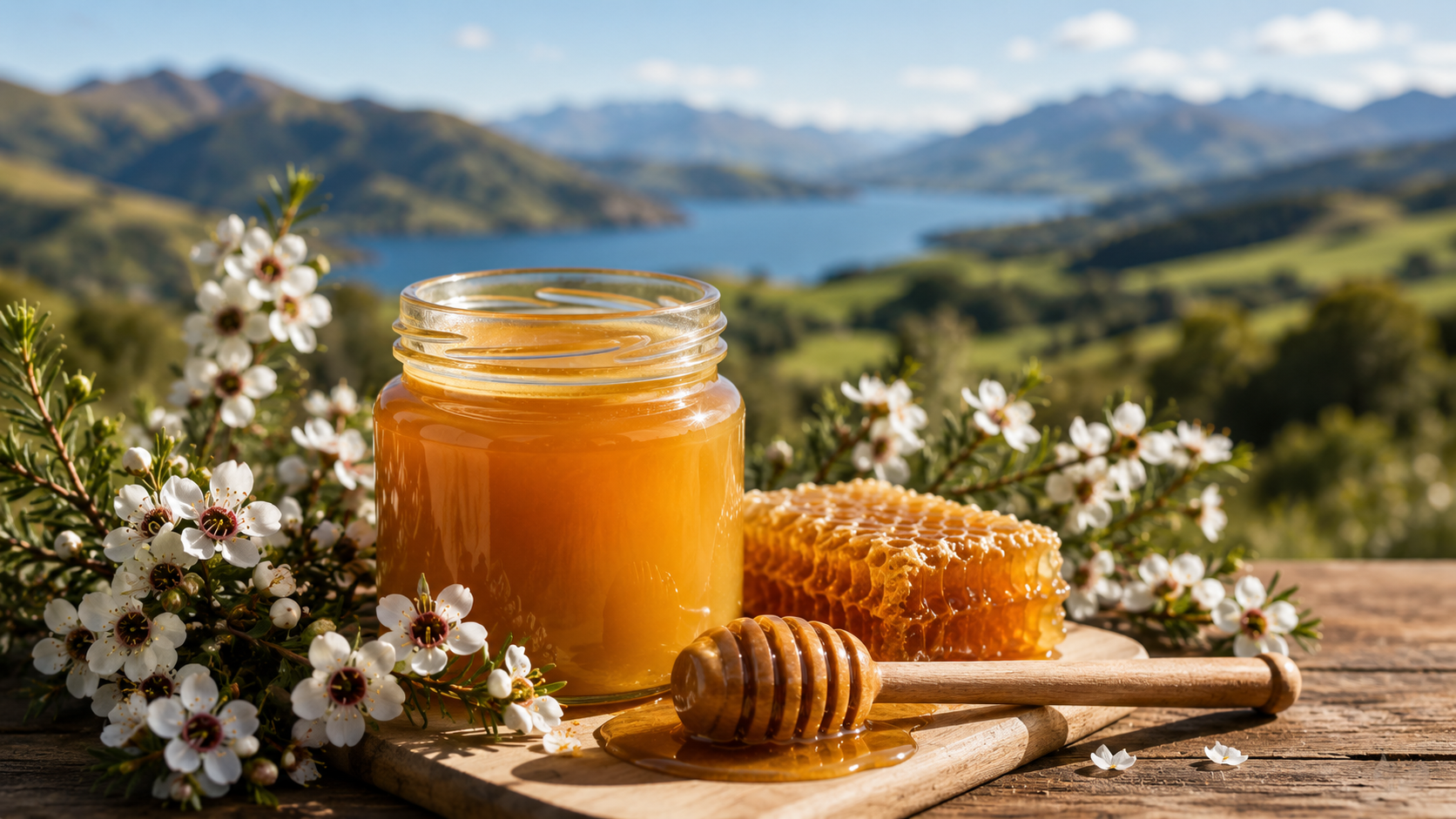
What Is Manuka Honey? Benefits, UMF vs MGO & How to Choose the Best
What Is Manuka Honey?
Manuka honey is one of the world’s most unique and highly valued natural health foods. Produced primarily in New Zealand, it comes from bees that collect nectar from the native Manuka tree (Leptospermum scoparium). Unlike regular honey, Manuka honey naturally contains high levels of methylglyoxal (MGO), a compound responsible for its unique antibacterial properties.
Over the past two decades, Manuka honey has gained worldwide recognition among health-conscious consumers, healthcare professionals, and scientific researchers. Today, it is commonly used as part of a daily wellness routine, appreciated for its rich flavor, premium quality, and naturally occurring bioactive compounds.
However, not all Manuka honey is the same.
You may have noticed labels such as UMF 10+, UMF 15+, MGO 263+, or MGO 514+, making it difficult to understand which product is right for your needs.
This guide explains everything you need to know about genuine New Zealand Manuka honey, including:
- What makes Manuka honey different from regular honey
- The science behind MGO and UMF ratings
- Proven health benefits supported by research
- How to identify authentic New Zealand Manuka honey
- How to choose the right strength for your wellness goals
Whether you’re buying Manuka honey for the first time or looking to upgrade to a higher-grade product, this comprehensive guide will help you make an informed decision.
If you’re still wondering what is Manuka honey, the following guide explains everything you need to know before choosing your first premium New Zealand Manuka honey.
Quick Answer
Manuka honey is a premium honey produced by bees that gather nectar from the Manuka tree, native to New Zealand. It is naturally rich in methylglyoxal (MGO), a unique compound associated with its antibacterial activity. Authentic Manuka honey is independently tested and graded using internationally recognized systems such as UMF® and MGO, helping consumers choose the appropriate strength for everyday wellness, premium nutrition, or specialized use.
Key Takeaways
- Manuka honey is produced mainly in New Zealand from the native Manuka tree.
- Its unique antibacterial properties are largely associated with naturally occurring methylglyoxal (MGO).
- UMF® and MGO are trusted grading systems that help measure quality and potency.
- Higher ratings do not always mean a better choice—select the grade based on your intended use.
- Genuine Manuka honey should be independently tested, traceable, and clearly labeled.
- Monofloral Manuka honey generally offers higher purity than multifloral varieties.
- Manuka honey should never be given to infants under 12 months of age.
Quick Facts
| Feature | Details |
|---|---|
| Botanical Source | Leptospermum scoparium |
| Country of Origin | New Zealand |
| Primary Active Compound | Methylglyoxal (MGO) |
| Quality Rating Systems | UMF®, MGO |
| Color | Dark amber to deep golden |
| Flavor | Rich, earthy, slightly herbal |
| Texture | Thick and creamy |
| Best Storage | Cool, dry place away from direct sunlight |
| Suitable For | Daily wellness, premium nutrition, natural sweetener |
| Not Suitable For | Infants under 12 months |
Why Has Manuka Honey Become So Popular?
Interest in natural health products has grown significantly over the last decade, and Manuka honey has become one of New Zealand’s most recognized exports. Consumers appreciate its exceptional quality, distinctive flavor, and scientific research supporting its unique properties.
Unlike conventional honey, genuine Manuka honey undergoes rigorous testing before it reaches consumers. New Zealand producers follow strict quality standards to ensure authenticity, purity, and traceability, making Manuka honey one of the most trusted premium honey products available worldwide.
Its growing popularity is also driven by increasing consumer demand for minimally processed foods, natural wellness products, and ingredients supported by scientific research.
In the following sections, we’ll explore exactly what makes Manuka honey unique, how UMF® and MGO ratings work, and how to choose the best Manuka honey for your personal wellness goals.
What Is Manuka Honey and How Is It Different from Regular Honey?
At first glance, Manuka honey may look similar to other types of honey. However, its composition, production process, and naturally occurring bioactive compounds make it one of the most unique honeys in the world.
Most conventional honey contains natural sugars, enzymes, antioxidants, amino acids, vitamins, and minerals. While many varieties also possess antibacterial properties due to hydrogen peroxide activity, these effects can diminish when exposed to heat, light, or certain enzymes.
Manuka honey is different.
Its antibacterial activity is largely associated with methylglyoxal (MGO), a naturally occurring compound formed from dihydroxyacetone (DHA), which is found in the nectar of the Manuka flower. Because of this unique chemistry, Manuka honey maintains a stable antibacterial profile that distinguishes it from ordinary honey.
In addition to MGO, genuine New Zealand Manuka honey contains naturally occurring plant compounds, antioxidants, enzymes, amino acids, and phenolic compounds that contribute to its premium quality and growing popularity among health-conscious consumers.
Another important difference is authenticity. Genuine Manuka honey must meet strict scientific identification standards established in New Zealand before it can legally be marketed as Manuka honey. These testing requirements help protect consumers from counterfeit or misleading products that may appear on international markets.
How Is Manuka Honey Produced?
Manuka honey begins with one remarkable native plant—the Manuka tree (Leptospermum scoparium).
The Manuka tree grows naturally throughout New Zealand and blooms for only a few weeks each year, usually between late spring and early summer. During this short flowering season, honey bees collect nectar almost exclusively from Manuka blossoms, producing one of the world’s most sought-after premium honeys.
After the nectar is collected, bees naturally convert it into honey inside the hive through enzyme activity and evaporation. The honey is then harvested by experienced beekeepers, carefully extracted, filtered, and tested before being packed.
Unlike ordinary honey, every batch of genuine Manuka honey undergoes laboratory analysis to verify authenticity and determine important quality markers such as:
- Methylglyoxal (MGO)
- Dihydroxyacetone (DHA)
- Leptosperin
- Hydroxymethylfurfural (HMF)
- DNA markers confirming Manuka pollen origin
These quality tests ensure consumers receive authentic New Zealand Manuka honey that meets internationally recognized standards.
Because the flowering season is short and production volumes are limited, genuine Manuka honey is considered a premium natural product with limited annual supply.
What Is MGO?
When shopping for Manuka honey, one of the first numbers you’ll notice is the MGO rating.
MGO stands for methylglyoxal, the naturally occurring compound responsible for much of Manuka honey’s unique antibacterial activity.
The higher the MGO number, the greater the concentration of methylglyoxal present in the honey.
Common MGO ratings include:
| MGO Rating | Typical Use |
|---|---|
| MGO 83+ | Everyday wellness |
| MGO 100+ | Daily use |
| MGO 250+ | Regular wellness support |
| MGO 400+ | Higher-strength premium honey |
| MGO 550+ | Advanced premium selection |
| MGO 850+ | Very high potency |
It’s important to understand that a higher MGO rating does not necessarily mean “better.” Instead, it indicates a higher concentration of methylglyoxal.
For many people, MGO 100+ or MGO 250+ provides an excellent balance between quality, flavor, and value for everyday use, while higher grades are often chosen by consumers seeking premium products.
Understanding what is Manuka honey helps consumers choose the right MGO rating for their individual wellness goals.
What Is UMF?
Another grading system commonly found on authentic New Zealand Manuka honey is UMF®, which stands for Unique Manuka Factor.
Unlike MGO, which measures only methylglyoxal concentration, UMF is a comprehensive certification program that evaluates several important markers, including:
- MGO
- Leptosperin
- DHA
- HMF
- Authenticity
- Purity
- Quality
Only licensed producers who meet the standards established by the UMF Honey Association may use the official UMF trademark on their products.
This makes UMF one of the most trusted certification systems available for consumers purchasing genuine Manuka honey.
Typical UMF ratings include:
| UMF Rating | Approximate MGO Equivalent |
|---|---|
| UMF 5+ | MGO 83+ |
| UMF 10+ | MGO 263+ |
| UMF 15+ | MGO 514+ |
| UMF 20+ | MGO 829+ |
| UMF 25+ | MGO 1200+ |
Although the values are closely related, UMF and MGO are not identical. UMF represents a broader quality assurance system, while MGO measures a single naturally occurring compound.
Monofloral vs Multifloral Manuka Honey
Another important distinction is whether the product is labeled Monofloral or Multifloral.
Monofloral Manuka Honey
Monofloral Manuka honey is produced primarily from the nectar of Manuka flowers and meets strict scientific criteria established by New Zealand authorities.
It typically offers:
- Higher purity
- Higher concentrations of key Manuka markers
- Richer flavor
- Greater premium value
For consumers looking for the traditional Manuka honey experience, monofloral products are generally the preferred choice.
Multifloral Manuka Honey
Multifloral Manuka honey contains nectar from Manuka flowers together with nectar collected from other flowering plants.
Although it still contains genuine Manuka nectar, it usually has:
- Milder flavor
- Lower concentrations of Manuka markers
- More affordable pricing
For everyday use, multifloral Manuka honey can be an excellent option for consumers who want to enjoy New Zealand honey at a lower price point.
Ultimately, the best choice depends on your personal wellness goals, taste preferences, and budget.
Health Benefits of Manuka Honey
Manuka honey has been valued for generations in New Zealand and is now one of the most extensively studied specialty honeys in the world. While ongoing research continues to explore its full potential, several benefits are supported by scientific evidence, particularly regarding its unique antibacterial properties.
It is important to remember that Manuka honey is a natural food—not a medicine. It should be enjoyed as part of a healthy lifestyle and should never replace professional medical advice or prescribed treatment.
1. Natural Antibacterial Activity
The most distinctive feature of Manuka honey is its naturally occurring antibacterial activity.
Unlike regular honey, whose antibacterial effects are largely due to hydrogen peroxide, Manuka honey contains significant levels of methylglyoxal (MGO). This compound remains relatively stable and has been widely studied for its ability to inhibit the growth of certain bacteria under laboratory conditions.
Researchers believe that Manuka honey’s effectiveness is not due to a single compound alone. Instead, MGO works alongside naturally occurring phenolic compounds, enzymes, organic acids, and antioxidants found within the honey.
This combination makes genuine Manuka honey unique among natural honey varieties.
Many customers also combine Manuka honey with New Zealand Propolis as part of their daily wellness routine.
2. Supports Everyday Immune Wellness
Many people include Manuka honey as part of their daily wellness routine.
Although Manuka honey should not be promoted as an immune treatment, it can be enjoyed as a nutritious natural food that complements a balanced diet.
Its naturally occurring antioxidants help protect cells from oxidative stress, while its rich nutritional profile makes it a popular addition to healthy lifestyles.
Many consumers enjoy one teaspoon each morning, either on its own or mixed into warm water or herbal tea.
You may also be interested in our collection of Immune Support Supplements.
3. Soothes the Throat
One of the most popular reasons people purchase Manuka honey is for throat comfort.
Its smooth texture helps coat the throat, while its naturally sweet taste makes it pleasant to consume.
Warm lemon water with Manuka honey is a traditional home remedy enjoyed around the world, particularly during colder months.
Although Manuka honey may provide soothing relief, persistent sore throats, fever, or signs of infection should always be evaluated by a healthcare professional.
4. Supports Oral Health
Research has also investigated the potential role of Manuka honey in supporting oral health.
Laboratory and small clinical studies suggest that Manuka honey may help reduce certain bacteria associated with plaque formation.
Unlike refined sugar, Manuka honey contains naturally occurring antibacterial compounds that have attracted interest among dental researchers.
However, Manuka honey is still a source of natural sugars and should never replace good oral hygiene practices such as brushing, flossing, and regular dental check-ups.
5. Provides Natural Antioxidants
Manuka honey naturally contains antioxidants, including flavonoids and phenolic compounds.
Antioxidants help neutralize free radicals that can contribute to oxidative stress within the body.
While antioxidant-rich foods are associated with overall wellness, Manuka honey should be viewed as one component of a balanced, nutrient-rich diet rather than a standalone solution.
6. Supports Digestive Wellness
Many consumers choose Manuka honey as part of their digestive wellness routine.
Although research is still evolving, some laboratory studies suggest that Manuka honey may support a healthy digestive environment.
Its natural composition has led many people to enjoy it before breakfast or mixed with warm water.
Current scientific evidence does not support claims that Manuka honey cures digestive diseases. Instead, it should be viewed as a nutritious natural food that may complement a healthy lifestyle.
Explore more products designed to support digestive wellness in our Gut Health Collection.
7. A Premium Natural Sweetener
For people looking to reduce refined sugar intake, Manuka honey offers a flavorful natural alternative.
Its rich, earthy taste means that many people use smaller amounts compared with ordinary table sugar.
Popular ways to enjoy Manuka honey include:
- Spread on whole-grain toast
- Mixed into Greek yogurt
- Added to oatmeal
- Blended into smoothies
- Stirred into herbal tea
- Paired with cheese or fresh fruit
Because of its premium flavor, even a small amount can enhance many everyday foods.
How to Choose the Best Manuka Honey
Not all Manuka honey products offer the same quality.
When comparing different brands, consider the following factors before making your purchase.
Choose Authentic New Zealand Manuka Honey
Look for products that clearly state they are produced and packed in New Zealand.
Authentic New Zealand Manuka honey undergoes strict scientific testing before export, helping ensure quality and traceability.
Check the UMF® or MGO Rating
Always choose products displaying a verified UMF® or MGO rating.
These grading systems provide valuable information about the honey’s tested quality and naturally occurring MGO content.
Higher numbers generally indicate higher concentrations of key Manuka compounds.
Consider Your Intended Use
Different strengths suit different needs.
| Purpose | Recommended Rating |
|---|---|
| Everyday wellness | MGO 83+ to 100+ |
| Daily premium use | MGO 250+ |
| Higher-strength wellness | MGO 400+ |
| Premium selection | MGO 550+ and above |
Selecting the highest rating is not always necessary. Many consumers find that moderate-strength Manuka honey provides excellent value for everyday use.
Buy from Trusted Brands
Choose brands that provide:
- Batch traceability
- Independent laboratory testing
- Clear country of origin
- Authentic certification
- Transparent labeling
Reliable brands invest heavily in quality assurance to protect both consumers and New Zealand’s reputation for premium Manuka honey.
How to Enjoy Manuka Honey
Manuka honey is versatile and easy to incorporate into your daily routine.
Popular serving ideas include:
- One teaspoon each morning
- Stirred into warm (not boiling) water
- Added to herbal tea
- Mixed into yogurt
- Drizzled over oatmeal
- Spread on toast
- Added to smoothies
- Paired with fresh fruit
Avoid exposing Manuka honey to excessive heat whenever possible, as prolonged high temperatures may affect some of its naturally occurring enzymes.
Who Should Avoid Manuka Honey?
Although Manuka honey is safe for most healthy adults, it may not be suitable for everyone.
You should consult a healthcare professional before regular use if you:
- Have diabetes or need to monitor blood sugar levels.
- Have a known allergy to bees, pollen, or honey.
- Are following a medically prescribed low-sugar diet.
- Are pregnant or breastfeeding and have concerns about dietary changes.
Important: Honey should never be given to infants under 12 months of age because of the risk of infant botulism.
Common Mistakes When Buying Manuka Honey
Many first-time buyers unknowingly purchase products that do not meet genuine Manuka honey standards.
Avoid these common mistakes:
- Buying products without a verified UMF® or MGO rating.
- Choosing products with unclear country of origin.
- Assuming higher ratings are always better.
- Confusing regular honey with authentic Manuka honey.
- Purchasing from unknown sellers without quality assurance.
Taking a few extra minutes to verify authenticity can help ensure you receive genuine New Zealand Manuka honey that matches your expectations.
Scientific Evidence
Manuka honey has attracted significant scientific interest over the past two decades. While researchers continue to investigate its full potential, current evidence supports several important findings regarding its unique composition and biological activity.
Antibacterial Activity
The antibacterial properties of Manuka honey are among its most extensively studied characteristics. Unlike conventional honey, Manuka honey contains naturally occurring methylglyoxal (MGO), which contributes significantly to its non-peroxide antibacterial activity.
Laboratory studies have demonstrated activity against a variety of microorganisms. However, laboratory findings should not be interpreted as proof that consuming Manuka honey can prevent or treat bacterial infections in humans.
Evidence Level: ★★★★★ Strong laboratory evidence
Wound Care Research
Medical-grade Manuka honey has been widely studied for wound management.
Sterile medical honey dressings are used in hospitals and healthcare settings under professional supervision for certain wound-care applications.
It is important to distinguish medical-grade honey from food-grade Manuka honey sold for everyday consumption.
Evidence Level: ★★★★☆ Moderate to Strong
Oral Health
Several studies suggest that Manuka honey may help reduce bacteria associated with plaque formation and support overall oral hygiene.
Although the findings are encouraging, larger clinical studies are still needed.
Evidence Level: ★★★☆☆ Moderate
Digestive Wellness
Current research investigating Manuka honey and digestive wellness is promising but remains limited.
Existing evidence suggests that Manuka honey may support a healthy digestive environment as part of a balanced diet, but more high-quality human studies are required.
Evidence Level: ★★☆☆☆ Limited
Comparison Table: UMF vs MGO
| Feature | UMF® | MGO |
|---|---|---|
| Measures Methylglyoxal | ✓ | ✓ |
| Tests Authenticity | ✓ | ✗ |
| Includes Additional Quality Markers | ✓ | ✗ |
| Independently Certified | ✓ | Depends on Brand |
| Easy to Compare | Moderate | Very Easy |
Neither grading system is inherently better than the other. UMF® provides broader quality assurance, while MGO offers a simple way to compare methylglyoxal concentration.
Recommended NaturalNZ Products
If you’re exploring premium New Zealand wellness products, consider these categories available from NaturalNZ:
- Premium Manuka Honey
- UMF Certified Manuka Honey
- MGO Manuka Honey
- Propolis Supplements
- Royal Jelly
- Colostrum
- Green Lipped Mussel
- New Zealand Wellness Supplements
People Also Ask
Is Manuka honey better than regular honey?
Manuka honey differs from regular honey because it naturally contains methylglyoxal (MGO), a compound associated with its unique antibacterial activity. Whether it is “better” depends on your intended use and personal preferences.
What is the best MGO level?
For everyday wellness, many consumers choose MGO 100+ or MGO 250+.
Higher ratings such as MGO 400+ or MGO 550+ are generally selected by those seeking premium-strength Manuka honey.
Which is better, UMF or MGO?
Both grading systems are useful.
UMF evaluates several quality markers, while MGO measures the concentration of methylglyoxal.
Can I eat Manuka honey every day?
Most healthy adults can enjoy Manuka honey daily as part of a balanced diet.
Because honey is naturally high in sugars, moderation is recommended.
Is Manuka honey suitable for children?
Children over 12 months of age can generally consume Manuka honey as part of a normal diet.
Honey should never be given to infants under 12 months.
Frequently Asked Questions
Does higher MGO always mean better quality?
Not necessarily.
Higher MGO indicates a greater concentration of methylglyoxal, but choosing the right strength depends on your intended use and budget.
Many readers ask, “What is Manuka honey and why is it different from regular honey?”
Now that you understand what is Manuka honey, you can confidently compare UMF®, MGO, authenticity, and quality before making your purchase.
Should Manuka honey be refrigerated?
No.
Store it in a cool, dry place away from direct sunlight.
Can I add Manuka honey to coffee?
Yes.
However, allowing hot drinks to cool slightly before adding Manuka honey may help preserve some naturally occurring enzymes.
Why is Manuka honey more expensive?
Production is limited by the short flowering season of the Manuka tree, strict quality testing, laboratory certification, and strong global demand.
Is all New Zealand honey Manuka honey?
No.
New Zealand produces many excellent honey varieties, but only honey meeting official Manuka identification standards can be marketed as genuine Manuka honey.
Final Thoughts
Manuka honey is one of New Zealand’s most remarkable natural foods.
Its unique composition, strict quality standards, and growing body of scientific research have earned it worldwide recognition among consumers seeking premium natural wellness products.
Whether you’re purchasing Manuka honey for everyday enjoyment, premium nutrition, or as a thoughtful gift, understanding UMF®, MGO, authenticity, and proper product selection will help you choose with confidence.
By selecting genuine New Zealand Manuka honey from trusted producers, you can enjoy one of nature’s most distinctive and carefully tested honey varieties.
References
- Ministry for Primary Industries (New Zealand)
- UMF Honey Association
- PubMed
- National Center for Biotechnology Information (NCBI)
- World Health Organization
- U.S. Food and Drug Administration
Author
NaturalNZ Editorial Team
NaturalNZ specializes in premium New Zealand health products, providing evidence-based educational resources to help consumers make informed wellness decisions.
Medical Disclaimer
This article is intended for educational purposes only and should not be considered medical advice.
Manuka honey is a natural food and is not intended to diagnose, treat, cure, or prevent any disease. Always consult a qualified healthcare professional regarding medical concerns or before making significant changes to your diet or wellness routine.
